Practical AI, Websites, Automation & Business Systems

Find the friction.
Build the fix.

Businesses do not need more technology simply because it exists.

I help businesses figure out what is actually slowing them down, costing them customers, creating repetitive work, or making operations harder than they should be. Then I build the practical fix.

Sometimes that means a better website. Sometimes it means automation, a connected workflow, a cleaner backend, an internal business tool, or finishing an AI-built application that stopped halfway between a good idea and something that actually works.

I start with the business problem first.

Kimberly Tarnovska

Founder · Auditor · Systems Builder

More than 30 years of hospitality, accounting, operations, and corporate internal compliance audit experience.

Kimberly Tarnovska, founder of I Am The AI Auditor

Start with the problem

You don't need to know the technical solution.

You only need to know where the business feels harder than it should.

Website

My website exists, but it isn't bringing me business.

Maybe the site looks dated. Maybe the mobile experience is poor. Maybe there is no clear path from visitor to customer. Maybe the site proves the business exists but does very little to help it grow.

Operations

We're doing too much manually.

If the same information is being copied into multiple systems, the same emails are being written over and over, or someone has to remember every follow-up, there is probably a better workflow.

AI

I know AI could help, but I don't know where.

AI should solve a real business problem. It should not become another disconnected tool employees have to manage.

App rescue

I started building something with AI and now I'm stuck.

The front end may look good while the backend is incomplete. Authentication may be broken. Supabase may be poorly wired. The database may not support the actual business workflow. The app may simply need someone to step back, audit what exists, and determine what needs to happen next.

Systems

Our information is everywhere.

Spreadsheets, inboxes, text messages, shared drives, forms, and memory can work until the business reaches the point where they no longer do.

Lead management

We keep losing inquiries and follow-ups.

A lead should not disappear because nobody remembered to send the second email.

That is where the audit starts.

Services

Practical systems for real business friction.

The solution may be a website, an automation, an application, a better workflow—or a clear decision not to add more technology at all.

01

AI + Workflow Audit

I review how the business actually operates and identify where time, information, opportunities, and customer experience are being lost.

The goal is not a giant technology report.

It is a prioritized, practical path forward: what matters, what does not, what should be fixed first, and where AI or automation can genuinely help.

02

Website Build & Rescue

A business website should do more than prove the company exists.

I build and rebuild websites around the way the business actually needs to operate—clear services, better customer journeys, stronger calls to action, better inquiry flow, and room for the business to grow.

If an existing site has gone off track, I can audit what is there before rebuilding anything unnecessarily.

03

Workflow Automation

Repetitive steps, handoffs, reminders, follow-ups, data entry, approvals, and reporting can often be simplified without creating a complicated technology stack.

The goal is less manual work, fewer dropped details, and a workflow people can actually use.

04

AI Implementation

AI is useful when it is attached to a defined business need.

That may include internal knowledge systems, customer-service support, document workflows, drafting and review, lead support, reporting, or role-specific assistance.

Human judgment stays where human judgment matters.

05

Lovable / Supabase / AI App Rescue

AI builders make it possible to move fast.

They also make it possible to end up with a beautiful front end sitting on top of an incomplete system.

I audit unfinished or unstable builds, identify what is really working, what is missing, and what is unsafe or poorly structured, then create a responsible recovery path.

That can include Supabase, databases, authentication, backend workflows, integrations, broken logic, incomplete features, and production readiness.

06

Business Systems

Sometimes the answer is not another standalone app.

Sometimes the business needs one dependable way to manage information, people, tasks, customers, sponsors, orders, projects, or operations.

I design systems around the real work—not around software for software's sake.

Featured work

Real businesses. Real operating problems. Systems built around the work people actually do.

These projects span hospitality, food service, youth sports, education, fundraising, SaaS, AI, and operations. The industries are different. The method is not. Understand the work. Find the friction. Build the right system.

Gracious Gatherings at the Pardue Center website presented on a laptop01

Hospitality · Catering · Events · Website Development

Gracious Gatherings at the Pardue Center

Gracious Gatherings needed a polished digital presence that could support both a catering operation and an event venue.

Read project story

I built the complete website around the customer journey: understanding the catering services, exploring menus, learning about the venue, reviewing event options, seeing the experience visually, and knowing exactly how to inquire or schedule a tour.

The site was designed to be useful for the business, not simply attractive.

I structured the content, navigation, calls to action, menu presentation, venue information, inquiry experience, and lead-capture flow so prospective customers could move naturally from discovery to conversation.

There was also room in the architecture for deeper automation and operational workflows later.

The client did not want active AI functionality, and I respected that decision. That is part of the job too.

The right system is not the one with the most technology. It is the one the business will actually use.

Built: Full business website, customer journey, menus, event and venue content, inquiry flows, lead capture, mobile experience, future-ready operational architecture.

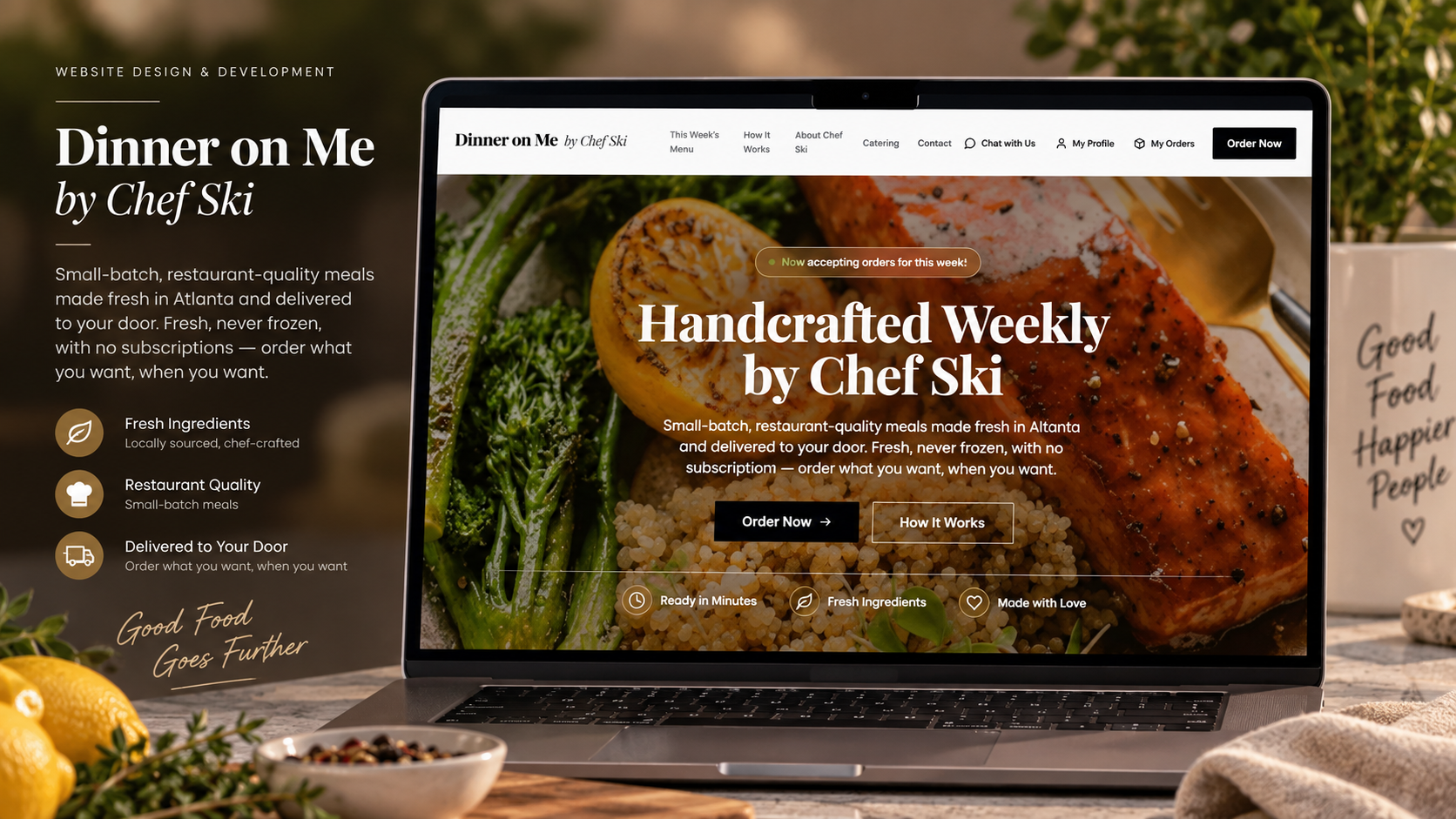
Dinner on Me by Chef Ski ordering website presented on a laptop02

Food & Beverage · Ordering · Operations · Business Systems

Dinner on Me by Chef Ski

Dinner on Me by Chef Ski started as a customer-facing food and ordering experience, but the real business problem goes much deeper than the website.

Read project story

A prepared-meal and catering business has to connect customers, weekly menus, orders, payments, recipes, ingredients, grocery purchasing, production, catering requests, and financial visibility.

I designed the platform around that full operating picture.

The public side gives customers a professional way to discover the weekly menu, understand the brand, place orders, and interact with the business.

Behind that, the architecture expands into order management, customer records, recipe cards, ingredient quantities, grocery planning, catering requests, payment workflows, financial tracking, and administrative visibility.

One of the most important concepts is connecting recipe quantities to actual orders so purchasing can be driven by real production demand.

I also audited the implementation when the public-facing experience had moved faster than the backend.

That audit changed the next phase of the build. Instead of pretending the system was finished, I identified what had not actually been built and created the plan to finish it correctly.

Built / Designed: Customer website, ordering experience, backend operations architecture, customer records, catering workflows, recipe and grocery-planning system, payment workflows, financial-system design, AI-assisted customer-support architecture.

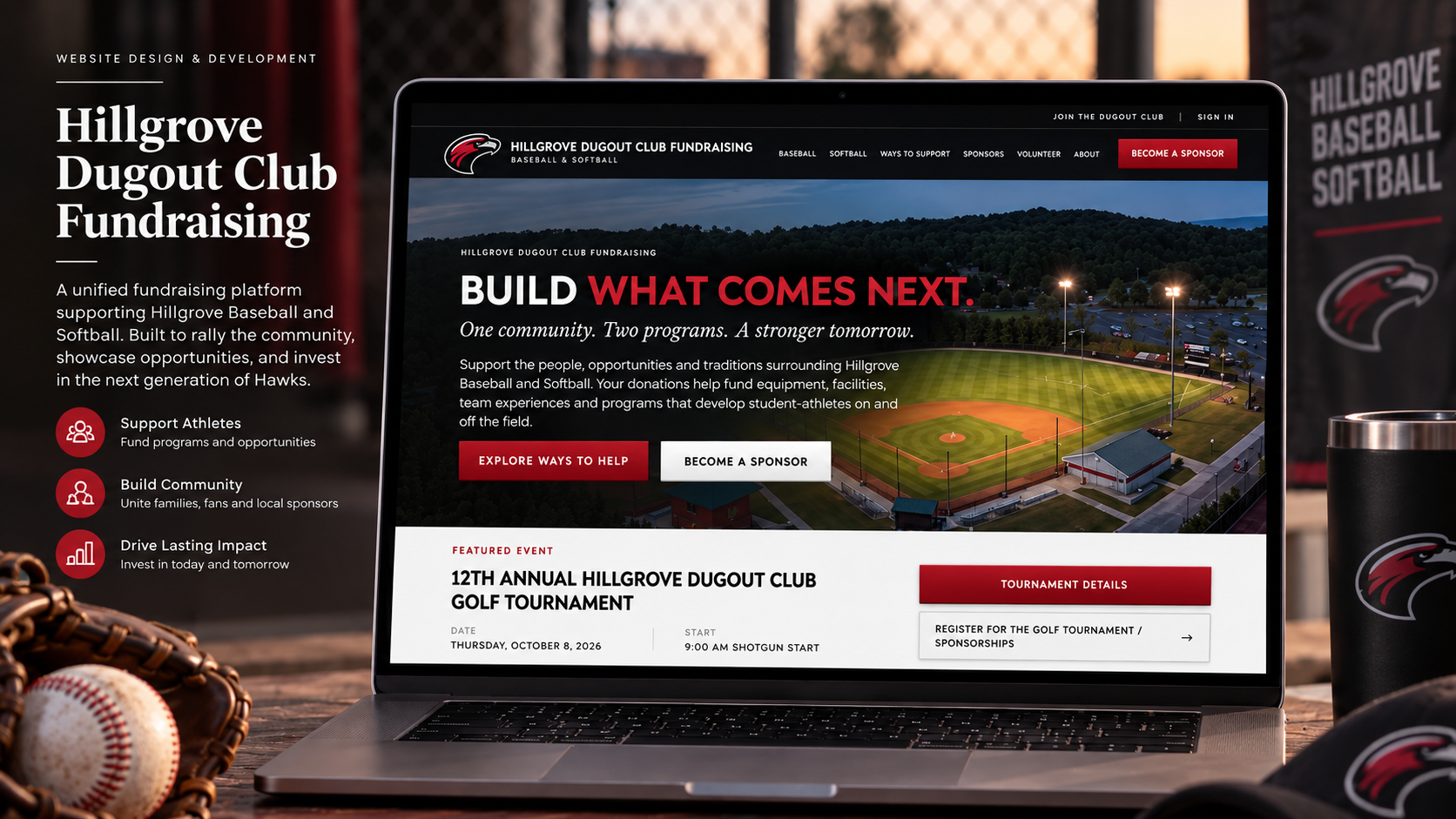
Hillgrove Dugout Club Fundraising website presented on a laptop03

Fundraising · Sponsorship · Operations · CRM · Administration

Hillgrove Dugout Club Fundraising

Hillgrove Dugout Club Fundraising is one of the clearest examples of why I call myself the AI Auditor.

Read project story

The visible website is only one layer. The real project is an operating platform designed around the fundraising, sponsorship, event, volunteer, communication, and administrative work required to support both baseball and softball.

I started by looking at how the organization actually operated. Information lived across spreadsheets, emails, volunteer knowledge, event files, sponsorship records, payment systems, and manual processes.

The goal was not to simply make a nicer fundraising website. The goal was to build continuity.

The platform was designed to support sponsor prospecting, sponsor commitments, fulfillment, fundraising campaigns, golf-tournament operations, volunteer activity, member and family relationships, communications, tasks, approvals, reporting, role-based access, payment-data workflows, knowledge resources, and season-to-season handoff.

I also built and managed the sponsorship infrastructure itself: prospect research, local business targeting, messaging, campaign structure, sponsorship packages, tracking, fulfillment requirements, and follow-up workflows.

The result is a platform designed not just for the people running the organization today, but for whoever has to run it next.

Built / Designed: Public fundraising site, sponsor CRM architecture, sponsorship pipeline, fundraising workflows, administrative dashboard, volunteer and people systems, role-based access, campaign infrastructure, outreach systems, event workflows, reporting architecture, knowledge and handoff systems.


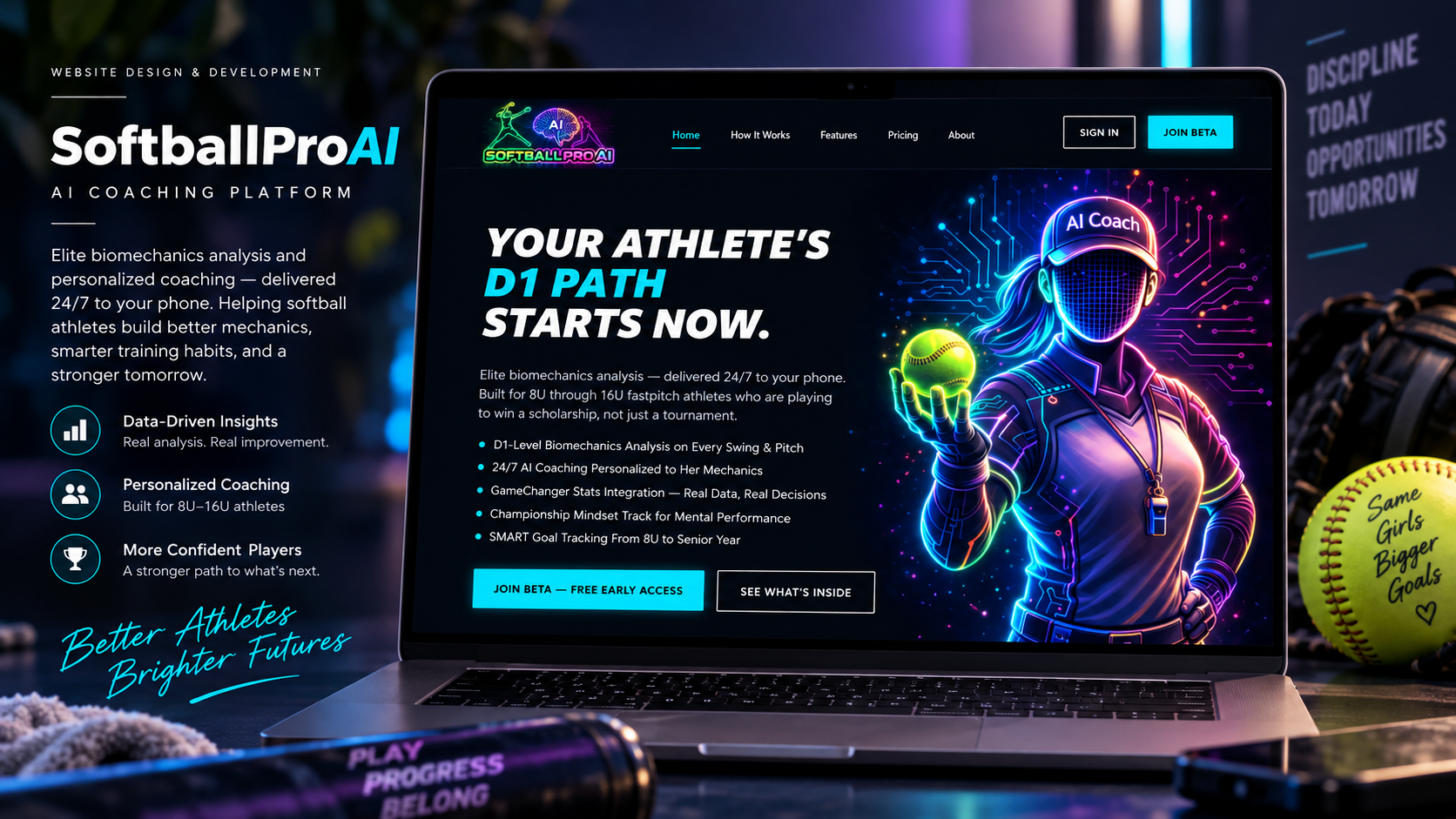
SoftballProAI coaching platform presented on a laptop04

AI · SaaS · Sports Technology · Product Development

SoftballProAI

SoftballProAI began with a simple idea: give young softball athletes access to better coaching, structure, feedback, and development support.

Read project story

It evolved into a much larger AI product.

I founded the project and designed the product around the different people involved in player development—athletes, parents, coaches, instructors, and administrators.

The platform includes AI-assisted coaching, structured softball knowledge, player-development tracking, role-based experiences, training workflows, progress systems, practice and coaching features, video-analysis architecture, biomechanics concepts, and personalized guidance.

My role has gone far beyond product ideation. I have directed architecture, requirements, user journeys, agent behavior, knowledge systems, backend structure, QA, testing, debugging, and development priorities.

I also routinely audit the application against what was supposed to be built. That has included identifying systems that looked complete but were not fully connected, finding missing backend behavior, reviewing AI-provider logic, and directing corrective implementation.

The project has been developed through a coordinated AI-assisted development workflow across multiple agents and tools, but the product direction, architecture decisions, verification standards, and business requirements remain centrally controlled.

Built / Directed: AI SaaS product architecture, role-based experiences, AI coaching workflows, structured knowledge systems, player-development tools, backend systems, database architecture, video-analysis concepts, multi-agent development coordination, testing, QA, and implementation audits.

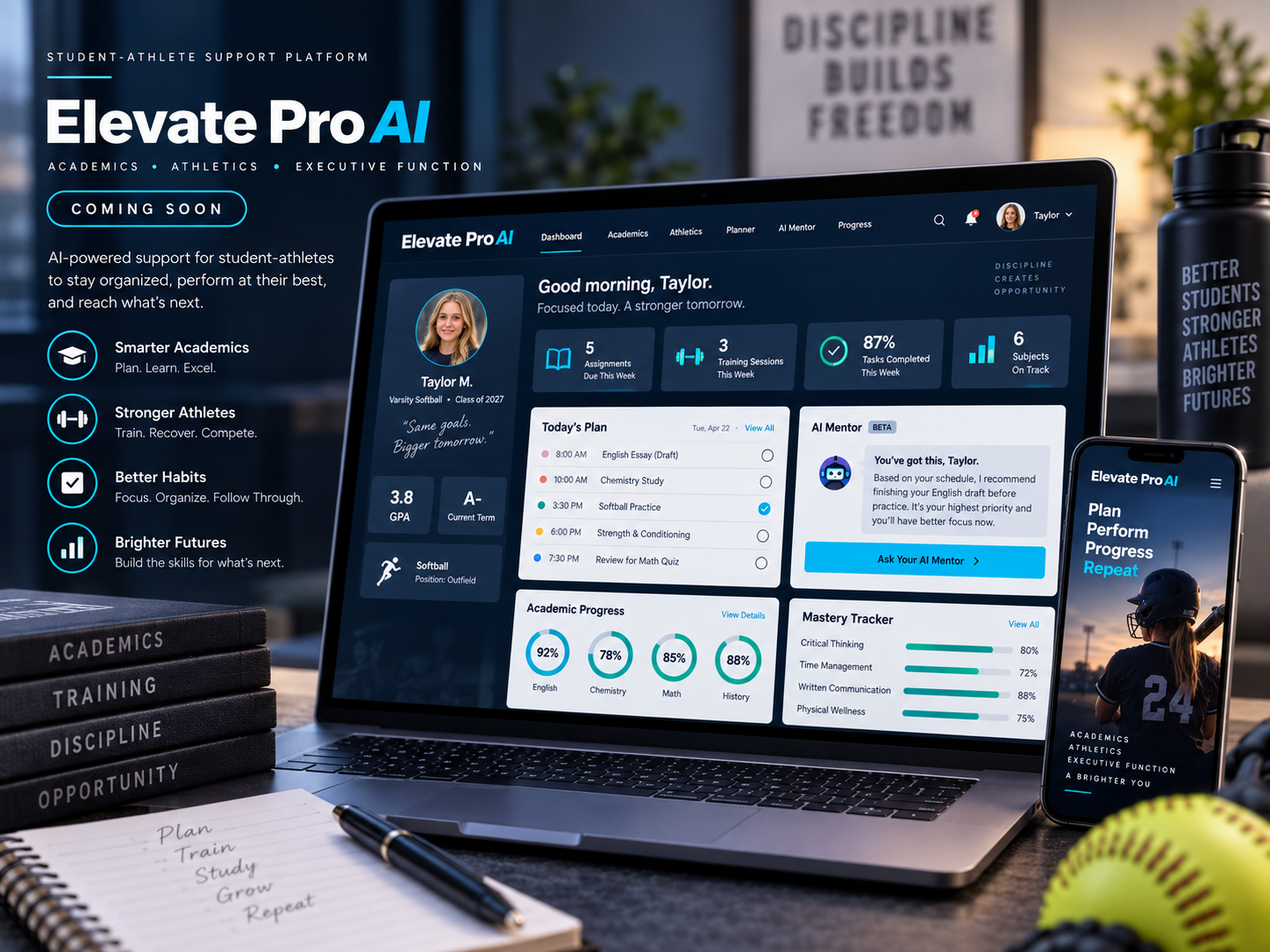
Elevate Pro AI student-athlete support platform presented on a laptop and phone05Coming soon. In production.

Education Technology · AI · Student Support · Product Architecture

Elevate Pro AI

Elevate Pro AI grew from a question I kept running into as a parent: Why are school responsibilities, athletic development, deadlines, communications, planning, and student support treated like completely separate worlds when the student experiences all of them at once?

Read project story

The product is designed as a connected student-athlete support system.

It brings together academics, assignments, deadlines, schedules, athletics, executive-function support, skill development, mastery tracking, planning, and AI-assisted mentoring.

A major part of the architecture is the Executive Function Engine—helping students understand what needs to happen next and break large responsibilities into manageable actions.

The Mastery Engine is designed to track actual development over time rather than reducing learning to a single grade or completed task.

The AI tutor model is deliberately designed not to simply hand students answers. It should teach, question, guide, and help build independent problem-solving ability.

I also designed Elevate Pro AI to reuse proven architectural components from other systems rather than rebuilding everything from scratch. That approach reduces duplication while making the overall product architecture stronger.

Designed / Directed: Student-athlete platform architecture, executive-function workflows, mastery tracking, academic planning, athletics integration, AI mentor/tutor behavior, parent/student roles, governance rules, modular architecture, and reuse strategy.

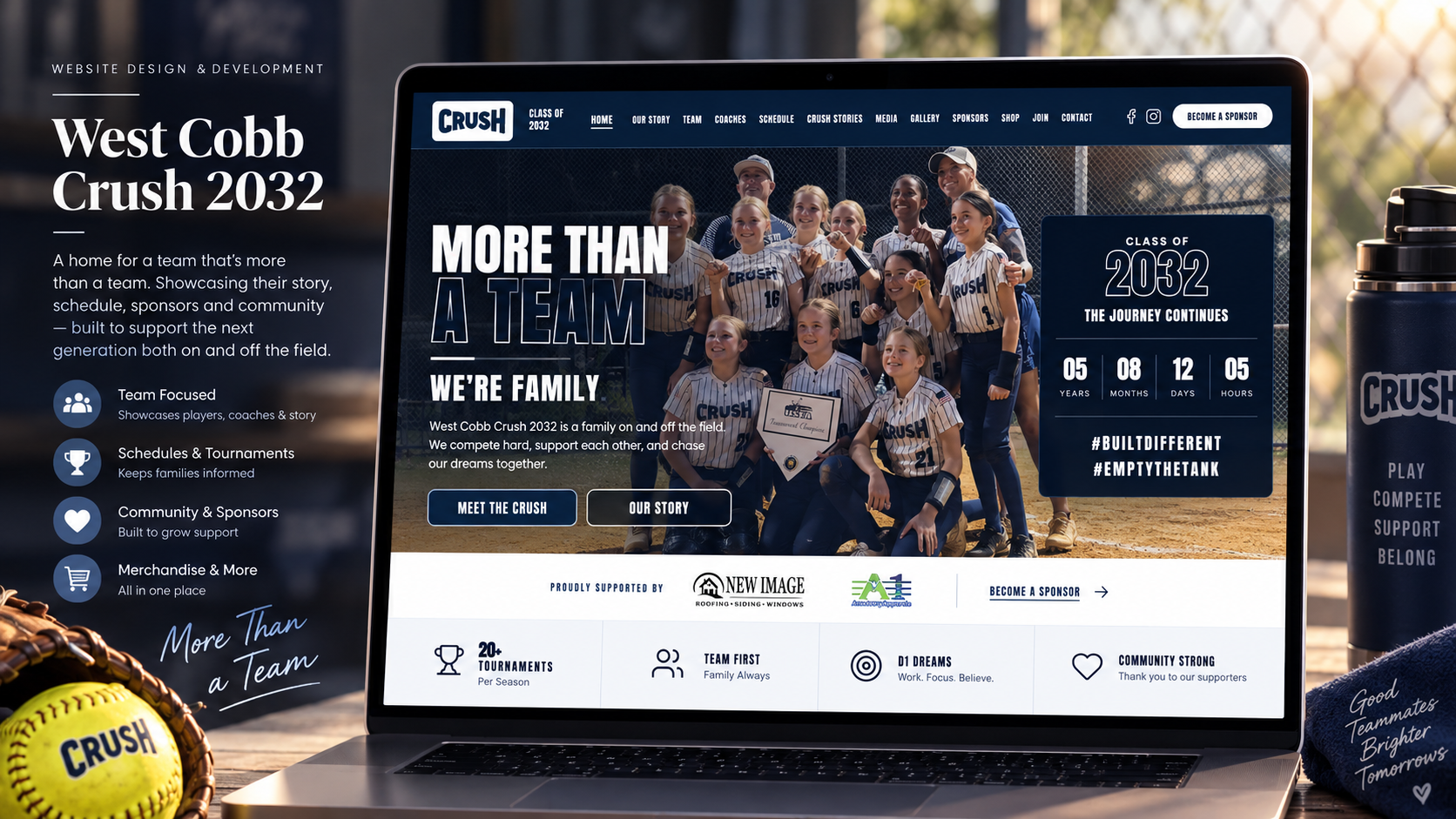
West Cobb Crush 2032 team website presented on a laptop06

Youth Sports · Sponsorship · Fundraising · Community Platform

West Cobb Crush 2032

West Cobb Crush 2032 began as a way to give a travel softball team a stronger digital presence.

Read project story

It quickly became much more than a team website.

I built the site to tell the story of the athletes, make the program easier to understand, give sponsors a real reason to participate, support fundraising, attract prospective players, and create a professional home for the team.

The platform includes player pages, coach information, schedules and results, team history, galleries, sponsorship opportunities, sponsor recognition, fundraising paths, tryout and player-interest workflows, community partnerships, and team storytelling.

I also built the business-outreach infrastructure behind the site. That includes sponsorship materials, prospect targeting, local-business outreach, campaign messaging, sponsor tracking, partnership proposals, and fulfillment planning.

The website became the public-facing layer of a much broader sponsorship and community-engagement system.

This project is also personal. I built it because my daughter plays for the team and because the families and coaches around her had shown up for us when our own circumstances changed.

That connection matters—but the project still had to work like a real system.

Softball pitcher delivering a pitch during game action

Built / Designed: Team website, player and coach profiles, sponsorship platform, fundraising workflows, sponsor outreach infrastructure, business partnership materials, lead capture, tryout interest, community engagement, team storytelling, and ongoing digital operations.

The Method

A disciplined way from friction to fix.

The audit mindset keeps the work grounded in evidence, priority, and real-world use.

  1. 01

    Audit

    Understand what is actually happening now. Look at the workflow, the technology, the people using it, the information moving through it, and the places where work is being lost or duplicated. No assumptions.

  2. 02

    Prioritize

    Not every problem deserves software. Separate the expensive friction from the noise. Identify what matters first, what can wait, and what should not be built at all.

  3. 03

    Build

    Create the simplest responsible solution that solves the actual problem. The answer may be a website, automation, workflow, database, AI capability, internal tool, or combination of systems.

  4. 04

    Verify

    A feature is not finished because it looks finished. Test the workflow. Check the backend. Confirm the data. Follow the process from beginning to end. Evidence beats confidence.

  5. 05

    Improve

    Businesses change. Systems should be able to change with them. Refine from real use, not from guesses.

Professional portrait of Kimberly Tarnovska

Founder

Business judgment first. Technology second.

Kimberly Tarnovska brings more than 30 years of hospitality, accounting, operations, and corporate internal compliance audit experience into the systems she builds today.

She has spent her career looking at how work actually happens—not how a process is supposed to work on paper.

That background now drives her approach to websites, AI, automation, and business systems.

The question is never: “What technology can we add?”

The question is: “What is actually broken, inefficient, disconnected, or harder than it needs to be?”

Then she builds from there.

I spent more than 30 years working inside hospitality and business operations before I ever started building AI systems.

I have worked in front-office operations, accounting, management, corporate compliance, process improvement, training, auditing, and business systems.

As a Corporate Internal Compliance Auditor, my job was to walk into operating environments, understand how things really worked, reconcile what people said was happening with what the evidence showed, identify gaps, and help create practical corrective action.

That mindset never left. What changed was the toolkit.

Today I use AI, software, automation, databases, and websites to solve many of the same kinds of operational problems I spent decades finding manually.

I am not interested in selling technology because it sounds impressive. I am interested in making businesses work better.

That may mean building something. It may mean fixing something. It may mean connecting systems that should already be talking to each other. And sometimes it may mean telling a business owner not to buy another tool.

Find the friction. Build the fix.

This Is My Why

The reason I keep learning. The reason I keep building.

I have always believed in starting with the why in every situation.

My family—and especially my daughter, Shannon—is my why. They are why I continue to learn, why I continue to build, and why I hold myself to a high standard in everything I create.

This is personal. It is also why I am very good at what I do.

Kimberly Tarnovska with her daughter Shannon
Shannon pitching during a softball game
Kimberly Tarnovska with Shannon and members of their family

Friction Intake

Tell me what's driving you crazy.

You do not need to know what technology you need. Start with the problem as you experience it.

Tell me what is taking too long, what keeps falling through the cracks, what customers complain about, what employees repeat manually, what system never worked the way it was supposed to, or what you started building and cannot finish.

I will start there.

What is wasting your time?
What is costing you opportunities?
What is harder than it should be?

That is enough to begin.

Submission storage is not configured yet. You can review the form, but it will not claim to send anything until Kimberly's Supabase project is connected and verified.

By submitting, you are asking Kimberly to review your business friction and follow up using your preferred method.